Cartoon Baseball Leopard Mom SVG: A Designer’s Hands-On Review
I’ve been staring at the Cartoon Baseball Leopard Mom SVG for a solid twenty minutes, twisting it in my mind, imagining how it would land on a freshly hooped sweatshirt or a simple cotton tote. A client asked me last week for something playful, something that felt like a hug from a sporty mom, and this design immediately came to mind. It’s not just another animal graphic; it’s a little personality piece, and the moment you see the leopard mom balancing a baseball motif with a soft cartoon expression, you know it has a specific kind of charm. The question is: does that charm survive the shift from screen to stitch?
The Whimsy That Grabs Attention
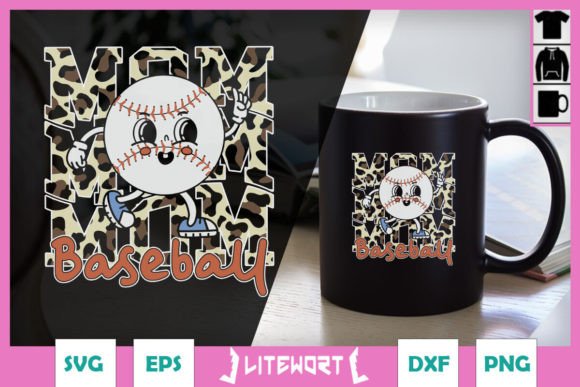
First impression? The Cartoon Baseball Leopard Mom SVG feels like a sunny Saturday morning. The leopard has a gentle, knowing smile, and the baseball element—maybe a cap, a bat, or a ball tucked beside her—gives the whole thing a sporty warmth without being aggressive. The mood is halfway between a nursery print and a dugout high-five. As a designer, I’m looking for balance: enough detail to read clearly, but not so much that the embroidery machine chokes on tiny bits. This design, in its vector form, offers that balance. The outlines are clean, the shapes are distinct, and the composition feels intentionally built for things like a cup wrap or a small apparel accent, which the description confirms by mentioning it’s pre-sized for cups. That’s a smart starting point because it tells me the scale is already considered; I won’t have to shrink it so much that the leopard mom’s face collapses into a thread blob.
What I appreciate most about the visual personality is that it’s not trying to be too many things at once. The cartoon style is soft, the leopard spots are simplified, and the baseball theme is clear without screaming. That makes it versatile. You could place it on a baby onesie, and it would read as a tender mom-and-sport concept. You could put it on a canvas tote bag, and it would feel like a casual, boutique statement. The mood is inherently giftable, and I’ve learned that designs with a clear emotional hook—like a mom leopard who loves baseball—tend to spark faster buyer decisions on Etsy or at a craft fair.
Where This Leopard Mom Design Truly Belongs
I’ve been mentally test-driving the Cartoon Baseball Leopard Mom SVG on a few real-life products I’ve made in the past month. The first one that clicks is a soft, heather gray sweatshirt. Imagine the design centered on the chest, stitched in a warm cream and a muted navy, with a little pop of coral for the baseball stitches. The leopard mom’s expression would sit right over the heart, and the whole thing would feel like a custom piece you’d find in a small shop window. That’s the kind of project where this design shines—apparel that tells a tiny story.
Another solid fit is a personalized tote bag. I recently had a customer who wanted a gift for her sister, a new mom who coaches little league. This design, with a name or a short phrase added below, would turn a plain canvas tote into a keepsake. The SVG format makes it easy to pair with text in any design program, and the pre-sized nature means I can drop it into my layout without wrestling with proportions. I’d also consider it for a kitchen towel, especially if the baseball theme leans into a “mom’s game day” vibe. The detail level is high enough to look intentional, but not so intricate that it gets lost on textured fabric.
For embroidered patches, the Cartoon Baseball Leopard Mom SVG would be a standout. I can see it as a 3-inch patch with a merrowed edge, stitched on a dad cap or a kid’s backpack. The cartoon lines translate well to satin stitch borders, and the leopard spots could be executed with a few well-placed fill stitches. Because the design is originally a vector graphic, I’d need to digitize it carefully, but the clean shapes give me a confident head start. I’ve tested similar cartoon-style SVGs on patches, and when the original art is tight, the embroidery file almost builds itself.
When the Project Gets a Little Tricky
However, I’d be doing my job poorly if I didn’t mention where this design needs a careful hand. Small hoop sizes are the first consideration. The artwork is pre-sized for cups, which suggests a modest footprint, but if you’re trying to fit it on a baby bib or a tiny cap panel, you’ll need to test. I’d recommend loading the SVG into your embroidery software and checking the stitch simulation at 2.5 inches or less. The leopard mom’s facial features—the eyes, the little nose—might become too small to digitize cleanly. You don’t want her smile to turn into a jagged line because the stitch length got compressed.
Fabric type also matters. Stretchy fabrics, like a thin jersey tee, can pull the design out of shape if the stabilizer isn’t right. I’d steer clear of placing this on a super lightweight, slinky fabric unless you’re ready to use a heavy cutaway stabilizer and perhaps a topper. Textured fabrics, like a waffle weave towel, could absorb the leopard spots into the background, so I’d stick to smoother surfaces for the crispest result. Dark fabrics are another twist: the leopard’s spots might need a lighter thread color than expected, or you might need to add a subtle outline that wasn’t in the original SVG to keep the design from blending into a black sweatshirt. Before committing, I always test the design in black and white on screen to see if the contrast holds up.
The Look That Builds Customer Trust
When I hang a finished product on my display rack, the Cartoon Baseball Leopard Mom SVG has to do more than look cute—it has to convey quality. The visual appeal of this design, when stitched well, tells a customer that they’re buying something thoughtfully made. The leopard’s gentle expression, combined with the baseball nod, creates a sense of recognition: “Oh, that’s so my mom!” or “That’s exactly how I feel about my little slugger.” That recognition builds trust. It’s not just a graphic; it’s a little piece of identity. And when the stitching is clean—smooth satin edges, even fill density, no puckering—the perceived value jumps. A customer who buys a tote with this design is likely to come back for a matching onesie or a pillow cover, because they trust the look and feel.
For Etsy sellers and small shop owners, the Cartoon Baseball Leopard Mom SVG offers a visual asset that can be used in mockups, too. The high-resolution PNG with a transparent background means you can layer it over product photos to create listings that look professional before a single stitch is made. This is a quiet advantage rarely talked about in embroidery circles. A good mockup helps sell the idea, and once the idea is sold, the actual embroidery has to deliver. The design’s consistency between the digital preview and the finished product is what keeps return customers. I’ve learned that the more the on-screen promise matches the stitched reality, the fewer “I thought it would look different” messages I get.
Designer’s Practical Notes for Embroidery Success
I’ve been doing this long enough to know that a great SVG doesn’t automatically become a great embroidery. The step between graphic and thread is where the real work lives. For the Cartoon Baseball Leopard Mom SVG, here’s what I’d tell any maker before they hoop up:
- Test on scrap fabric first. Use a similar weight and weave to your final product. The design’s pre-sized nature for cups might mean it’s already optimized for a specific hoop, but your machine’s tension and thread choice will change the outcome.
- Check thread color contrast. The leopard spots and the baseball elements need to read distinctly. If you use a dark brown thread for the spots and a black thread for the baseball stitches, they might merge. I’d separate them by at least two shades.
- Review stitch density. When you digitize the SVG, avoid overdoing the fill on the leopard’s face. Too many stitches can make the fabric stiff and distort the soft expression. A light fill with a running stitch underlay usually does the trick.
- Confirm hoop size. Even though the design is “pre-sized for cups,” that doesn’t guarantee it fits your machine’s hoop. Open the SVG in your embroidery software and measure the exact dimensions before you start digitizing. If your machine maxes out at 4x4, you might need to scale down, but save a copy of the original just in case.
- Inspect small details. Zoom in on the leopard’s eyes, the baseball stitching, and any tiny accents. In the PNG, these might look sharp, but as an embroidery file, they can become problematic. I’d simplify any detail smaller than 1mm to a single running stitch.
- Test in black and white mockups. This is an old designer trick. Convert the design to grayscale on your screen. If the shapes still read clearly, you’re golden. If they turn into a muddy mess, you’ll need to adjust your thread colors or add outlines.
- Compare light and dark fabric backgrounds. The leopard mom’s warm tones might pop on a natural canvas, but on a navy or black background, you might need to add a subtle white or light gray underlay. I always sew a small sample on both extremes before starting a batch.
- Use proper stabilizer. For a design like this on a tote bag or sweatshirt, a medium-weight cutaway stabilizer is my go-to. For a kitchen towel, I’d use a tear-away with a water-soluble topper to keep the stitches from sinking in. The design’s layered nature—leopard spots, baseball elements, perhaps text—needs a stable foundation.
- Check licensing for commercial use. The product description mentions SVG, PNG, and DXF files, but it doesn’t specify if the design is cleared for selling finished products. Before you list embroidered items on Etsy or at a craft fair, verify the commercial license terms. Using it for personal gifts is one thing; selling dozens of patches is another. If the details aren’t clear, reach out to the seller. I’ve learned that a quick message can save a lot of heartache later.
One more thing that often gets overlooked: the design’s origin as a Graphics type in the Crafts category means it’s built for multiple uses—printing, vinyl, sublimation—and that’s a strength. But for embroidery, it’s not a ready-to-stitch file. You’ll need to digitize it, which means you have creative control over the stitch types. I’d lean into a combination of satin stitch for outlines and key features, and a light fill stitch for the leopard’s body. The baseball can be a simple satin outline with a contrasting fill for the red stitches. The running stitch can handle subtle details like whiskers. The fact that the SVG is already clean and well-organized makes the digitizing process faster, and that’s time saved for a busy small business owner.
I’ve seen too many crafters buy a beautiful graphic and then get frustrated when it doesn’t stitch out the way they imagined. The Cartoon Baseball Leopard Mom SVG isn’t that kind of file. It’s a solid starting point—a design asset that, with a thoughtful day of digitizing and testing, can become a signature product. The mood it creates, the sporty-mom warmth, is something that customers genuinely connect with. I’ve already had a mom ask me if I could make a matching set: a sweatshirt for her and a tiny tee for her daughter. That’s the power of a design that feels both personal and playful. It’s not just a leopard; it’s a story. And in the world of handmade products, stories stitch better than anything else.