Favorite Baseball Player Calls Mom SVG
When I first opened the Favorite Baseball Player Calls Mom SVG in my design software, I smiled. That is always a good sign. The concept felt immediate and warm, the kind of graphic that tells a tiny story before a single stitch lands on fabric. It is not trying to be everything at once. It sits in that sweet spot between sporty and sentimental, and for anyone who designs embroidered products for families, that combination is absolute gold.
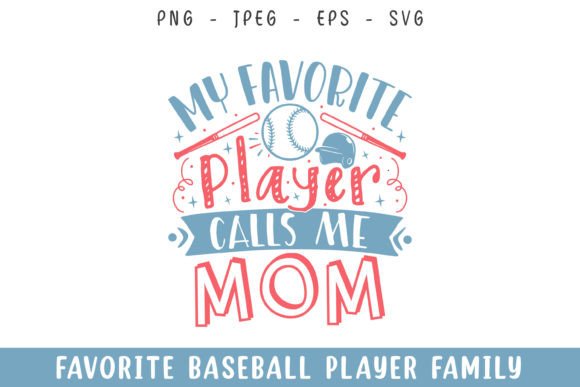
The layout reads clearly. You get the baseball visual language, the player silhouette or emblem that anchors the sports identity, and then the emotional hook: the call to mom. That pairing is what makes this design work for handmade sellers. It is not just another baseball SVG tossed into a crowded category. It has a reason to exist, and that reason translates straight into product appeal.
The Mood This Design Brings to a Project
What struck me immediately was how the Favorite Baseball Player Calls Mom SVG balances energy and tenderness. The baseball elements feel active, almost game-day lively. But the message softens everything. This is a design that would look equally natural on a dugout hoodie and a Mother's Day tote bag. That versatility matters when you are building a small product line or planning seasonal inventory.
From a stitching perspective, the visual personality is confident without being overly complex. Too many sports-themed embroidery files try to cram in every detail: laces, stitching on the ball, motion lines, multiple text weights. This one keeps the focus where it belongs. The theme is unmistakable, and the sentiment does the heavy lifting. For embroiderers, that often means cleaner stitch paths and fewer headaches during digitizing.
Where This Design Truly Belongs
I ran through my mental checklist of products I have made over the years, and several jumped out. A sweatshirt embroidery project for a baseball mom would be the most obvious fit. Picture a relaxed-fit crewneck in heather gray, with this design stitched across the chest in a deep navy thread. The contrast would be crisp, the message instantly readable, and the emotional connection strong enough to sell itself.
Beyond apparel, I kept thinking about tote bag design possibilities. A canvas tote with this graphic centered on the front pocket would make a wonderful tournament-day bag. Moms carry snacks, gear, and water bottles all weekend long. A bag that celebrates their role in a genuine way tends to get noticed. Other crafters at the fields ask where you got it. That is how small shop products spread organically.
The embroidered patch route also deserves a mention. This design, scaled down and stitched with a tight satin stitch edge, could become a sew-on or iron-on patch for baseball bags, jackets, or caps. Patches continue to perform well for Etsy sellers and craft fair vendors, especially when the message feels personal and specific rather than generic.
A Real Project Scenario Worth Thinking Through
Let me describe a scenario I actually considered while evaluating this file. I imagined a client request for a custom embroidered throw pillow. The client wants a gift for her son, a high school baseball player heading off to college. She wants something for his dorm room that reminds him of home without being overly sentimental or childish.
I would take the Favorite Baseball Player Calls Mom SVG, place it on a sturdy linen or cotton blend pillow cover, and stitch it in a single rich thread color: maybe a vintage gold or a deep forest green. The design would read as thoughtful, not loud. The mom would feel seen. The player would actually use the pillow. That is the real test of a good embroidery file: does the finished product get used, or does it sit in a drawer?
This design passes that test. The concept is evergreen. Baseball seasons come and go, but the player-mom connection does not expire. A pillow, a blanket, a framed hoop art piece: all of these would carry the same quiet staying power.
How the Vector Quality Affects Embroidery Results
The product description notes that the design is made with 100% vector graphics. For anyone who digitizes their own embroidery files, that is a meaningful detail. Vector artwork scales cleanly, which means you can resize the design for different hoop sizes without losing edge clarity. When I am preparing a machine embroidery design from a customer-supplied SVG, I always prefer vector source files. The paths are cleaner, the nodes are more predictable, and the resulting stitch file tends to have fewer unexpected jumps or trims.
One practical note: the description also mentions that it is possible and easy to change color for a dark t-shirt or white t-shirt or mugs. That flexibility is useful. I often test a design in two or three colorways before committing to thread choices. A design that can shift from white on navy to black on cream without losing impact saves me time. I can visualize the same embroidery file working on a dark apron for Father's Day, then flipped to a light version for a Mother's Day tea towel. That kind of adaptability makes a digital embroidery file more valuable across a product range.
Fabric Choices and Surface Considerations
If you are planning to stitch this on baby embroidery items, like a tiny baseball-themed onesie or a nursery blanket, I would recommend scaling the design down cautiously. Pay attention to any small text or thin elements. The sentiment is adorable for baby products, but the detail level needs to match the hoop size and the fabric stability. Soft stretchy fabrics require a solid stabilizer strategy, and tiny lettering can close up if the stitch density is too high.
For caps and hats, the curved surface always presents a challenge. The design's layout will need to be tested on a cap frame. The sweet spot is usually centering the main graphic and keeping the text block compact enough to avoid the side seams. I would run a sample on a structured baseball cap, ideally in a midweight cotton twill, before committing to a full production run. Curved surfaces can distort alignment in ways that flat fabric never reveals.
On kitchen towels and tea towels, the waffle or textured weave can interfere with fine detail. I would lean toward a slightly bolder stitch style, possibly increasing the pull compensation slightly, and choosing a thread color that contrasts well with the fabric. A design like this, stitched on a flour sack towel, makes a charming holiday gift for the baseball family that already has enough mugs.
Stitch Type Thoughts Without Overstepping
I cannot speak to exact stitch counts or file formats, since those are not provided in the product listing. But I can share what I look for in a well-digitized version of a design like this. A thoughtful mix of satin stitch for borders and text, paired with fill stitch for larger solid areas, creates a polished look. The running stitch should handle fine details without creating unnecessary trims or jumps. If the design includes very small decorative elements, I would check the stitch density carefully. Dense stitching on lightweight fabric leads to puckering, and that is a quick way to lose customer trust.
Before using this design in a client project or a commercial embroidery run, I would stitch a sample on scrap fabric that matches the final product weight. I always test in both light and dark thread on the intended fabric color. Something that looks crisp on a white t-shirt might disappear on a dark sweatshirt if the contrast is not right. Also, I recommend testing the design in black and white to see if the shapes hold up without color cues. That reveals whether the silhouette and composition are strong enough to carry the message on their own.
Small Details That Elevate the Finished Product
One thing I appreciate about the Favorite Baseball Player Calls Mom SVG is how it leaves room for the maker to add their own touch. The design is complete, but it does not feel over-designed. You can pair it with a subtle background texture, frame it with a decorative stitch border, or combine it with a name or number for a fully personalized product. That flexibility is important for Etsy sellers and small shop products where customers expect customization options.
When I prepare a custom apparel listing, I often create two or three variations around a single base design. With this SVG, I could see offering a version with the player's jersey number, a version with a short name, and a clean version as shown. Each one expands the product line without requiring a completely new design asset. That efficiency matters when you are managing a craft business with limited time and resources.
Licensing and Commercial Use Awareness
I always remind fellow makers to confirm the licensing terms before selling finished items or digital products. The product description does not specify the license type, so I would reach out to the seller or check the listing details carefully. If you plan to use this embroidery file for physical products, for printable mockups, or for digital product previews, you need to know whether commercial use is allowed and whether any restrictions apply. This is standard practice, not a flaw in the product. It is simply part of being a professional who respects design ownership.
Giftability and Customer Response
If I were to rank this design on pure giftability, it would score highly. The message is specific enough to feel personal, but broad enough to work for a wide range of baseball families. A grandmother buying for her grandson, a wife buying for her husband, a team mom buying for the whole squad: each one sees a slightly different story in the same graphic. That emotional range is what makes a personalized gift sell well. Customers do not just buy the product. They buy the feeling of being understood.
For craft fair products, this design would live comfortably on a table alongside other family-themed and sports-themed items. It would catch the eye of anyone walking by who has a baseball player in their life and a soft spot for mom. I would display it on a neutral canvas tote, a cozy fleece blanket, and a simple apron to show the range. The consistency across different products reinforces the design's versatility without needing a hard sell.
Final Practical Notes for the Embroidery Designer
Before I wrap up, here are the steps I would personally take before using the Favorite Baseball Player Calls Mom SVG in a real project. Test the design on scrap fabric that matches the final product weight. Check the thread color contrast against both light and dark backgrounds. Review the stitch density in small detail areas. Confirm the hoop size accommodates the design at the intended scale. Inspect the design in a single-color mockup to verify silhouette strength. Use proper stabilizer for the fabric type. And verify the commercial license if you plan to sell finished products.
None of these steps are unique to this design. They are just good habits. But a design this clean and emotionally resonant deserves a careful setup. When the stitching is right, the result is a product that feels professional, personal, and ready to be gifted or sold with confidence.